Our Projects
This automated liquid filling and packaging machine, manufactured by Calvin Engineering, is designed for efficient and hygienic bottling operations in the food and beverage industry. It is ideal for products such as oils, juices, syrups, and sauces, featuring a conveyor-driven system that seamlessly moves bottles through filling, capping, and labeling stages. Built with a stainless-steel enclosed structure, the machine ensures high standards of safety, cleanliness, and contamination control. Integrated sensors, piping, and advanced control components indicate a PLC-based automation system, enabling precise filling accuracy, high-speed production, and minimal manual intervention.
At Calvin Engineering, the manufacturing of such advanced machinery involves a combination of precision engineering and modern fabrication technologies. High-accuracy CNC machining, laser cutting, and TIG/MIG welding are used to construct durable stainless-steel structures, while polishing processes ensure food-grade finishes. The machine is equipped with essential mechanical components such as pumps, valves, conveyors, and motors, along with automation systems including PLCs, sensors, HMI interfaces, and pneumatic controls. Each system undergoes rigorous assembly, calibration, and quality testing to deliver reliable performance, operational efficiency, and long-term durability for industrial applications.
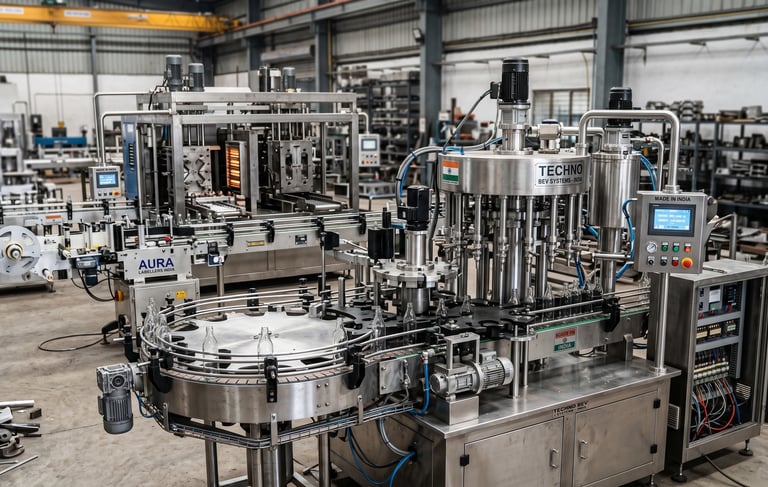
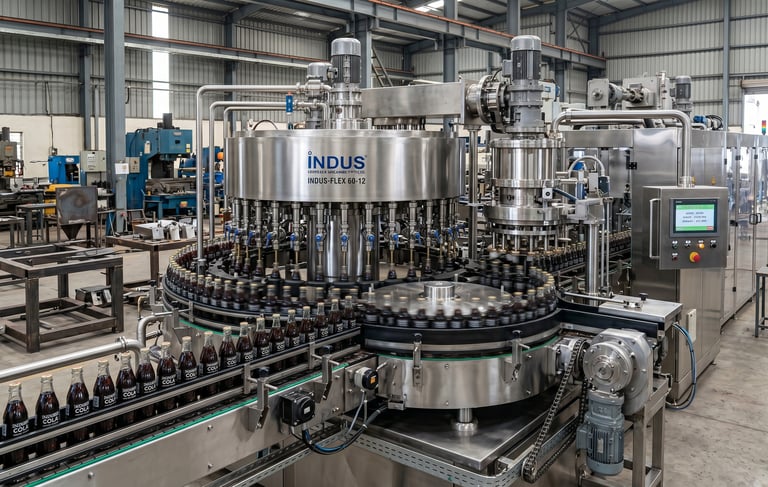
This is an automated soda (carbonated beverage) production and filling system designed for high-efficiency manufacturing. It integrates multiple stages—including water treatment, syrup mixing, carbonation, filling, and packaging—into a seamless process. Stainless-steel tanks are used to blend purified water with flavoring syrups and CO₂ under controlled pressure to produce carbonated drinks, while the hygienic piping system ensures safe liquid transfer. The PLC/HMI control panel enables real-time monitoring and precise regulation of pressure, temperature, and flow, ensuring consistent product quality and operational control.
The conveyor system moves bottles through automated stages such as rinsing, filling, capping, and labeling, reducing manual intervention and increasing production speed. Built using food-grade stainless steel (SS304/SS316), the system ensures durability and hygiene while integrating components like pumps, valves, sensors, pneumatic actuators, and servo motors. Advanced versions may include AI-based monitoring and predictive maintenance to minimize downtime and optimize performance. Overall, this machine delivers high-speed, reliable, and scalable beverage production for modern food and beverage industries.
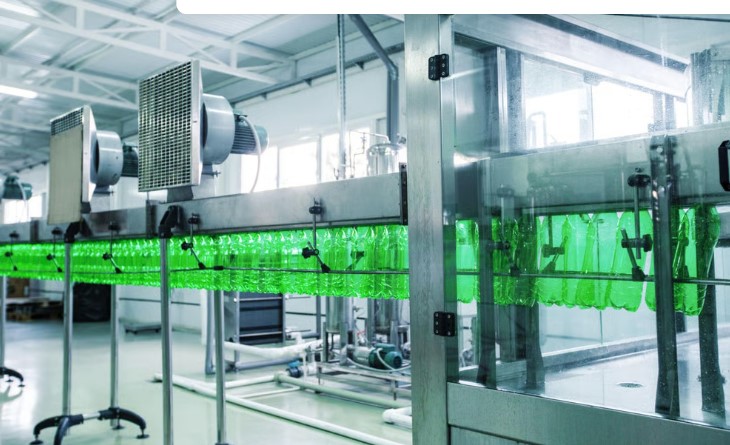
This is an air conveyor system, widely used in beverage and bottling industries to transport empty plastic bottles (typically PET) efficiently across different stages of production. Instead of using traditional belt conveyors, this system uses high-velocity air flow to move lightweight bottles through a guided track. The bottles are held by their neck rings and glide along rails while air blowers mounted on top generate continuous airflow, pushing them forward smoothly. This method is especially useful for maintaining hygiene, reducing mechanical contact, and handling bottles at high speeds without damage or contamination.
Air conveyors are typically installed between processes such as blow molding machines and filling lines, ensuring a seamless transfer of bottles. The enclosed stainless-steel structure protects the bottles from external contamination, making it ideal for food and beverage environments. From an engineering perspective, the system consists of centrifugal blowers, air ducts, guide rails, stainless-steel frames, and control systems to regulate airflow and speed. Compared to conventional conveyors, air conveyors offer advantages such as low maintenance, energy efficiency, reduced wear and tear, and higher operational speed, making them a critical component in modern automated production lines.
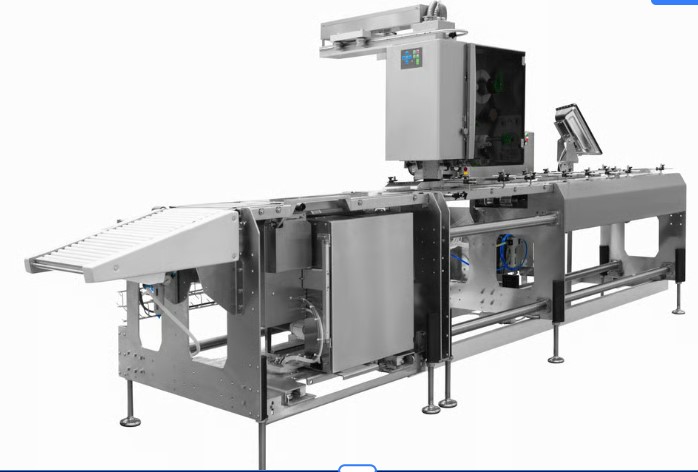
This machine is an automated inspection and sorting system, commonly used in food, beverage, and packaging industries to ensure product quality and safety. It is typically installed after filling or packaging stages to inspect bottles or containers for defects such as incorrect fill levels, foreign particles, cap issues, or labeling errors. The conveyor system feeds products through the inspection chamber, where advanced technologies like vision systems, sensors, or X-ray/optical scanners analyze each item in real time. Any defective or non-compliant product is automatically rejected from the line, ensuring only quality-approved items proceed further.
From an engineering standpoint, the machine is built with a stainless-steel frame to meet hygiene and durability standards, especially in food-grade environments. It integrates key components such as high-speed conveyors, cameras or detection units, PLC-based control systems, and an HMI interface for monitoring and adjustments. Pneumatic or servo-driven rejection mechanisms are used for precise removal of faulty products without disrupting the production flow. This type of system significantly enhances quality control, reduces manual inspection errors, and improves overall production efficiency, making it an essential part of modern automated manufacturing lines.
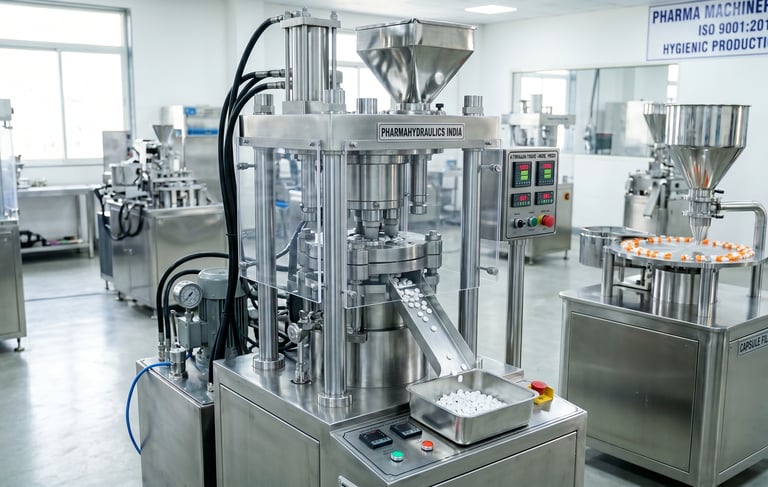
This setup is a pharmaceutical tablet manufacturing and packaging line, designed for high-precision, hygienic production of tablets at industrial scale. The machine labeled IPT-2000 is a rotary tablet press, where powdered formulation is compressed into tablets using multiple punches and dies in a continuous rotary motion. The tablets are then transferred via conveyors to downstream equipment such as the Fluid Bed Dryer (FBD-300) for drying granules, and the Auto Coater for applying protective or functional coatings (such as film coating for stability, taste masking, or controlled release). The stainless-steel construction ensures compliance with strict pharmaceutical hygiene standards like GMP.
Further along the line, the system includes blister packaging machinery (ACF-1200), where tablets are automatically sealed into blister packs for safe storage and distribution. The entire process is highly automated and controlled through PLC/HMI systems, allowing precise control over parameters such as compression force, temperature, humidity, and coating thickness. Supporting components like vacuum systems, dust extraction units, feeders, and conveyors ensure smooth material handling and clean operation. Overall, this integrated pharma line enables consistent product quality, high production efficiency, regulatory compliance, and minimal human intervention, making it essential for modern pharmaceutical manufacturing.